Why an Offset Certificate No Longer Answers Your Client's Emissions Question


Corporate charter clients increasingly need to defend the aviation emissions they report.
Finance teams and auditors are asking where those numbers came from, and "we bought an offset" no longer answers that question, because an offset is a transaction, not a measurement.
It records that something was paid, not what was emitted.
A broker who can hand a client a measured footprint, with the route and aircraft behind it, is answering the question the client's finance team is actually being asked.
A certificate is not. For brokers, the emissions figure is becoming another deliverable alongside the itinerary and the invoice.
The rest of this article shows how to produce that footprint per booking, without owning a flight-data operation.
Why the offset figure does not answer the question
An offset is priced to a generic tonnage.
The actual footprint of a specific charter depends on the aircraft, the route, and the conditions flown.
A measured method starts there, and produces the number the trip actually generated, which is the number the client's report needs, separate from whatever the client then chooses to do about it.
A certificate says something was paid. A footprint says what was flown.
The booking, walked through
Anonymised and illustrative. Figures are illustrative, to be replaced with the trip's measured output.
A client books London to Geneva on a Citation XLS and asks for the footprint. The offset provider quotes a round figure from a generic assumption.
TailCheck identifies the chartered aircraft's observed flying history, so the calculation begins with measured activity rather than brochure specifications.
The aircraft type and the route actually flown are resolved, the route and aircraft type are resolved, and the published methodology is applied to produce a footprint for that specific leg.
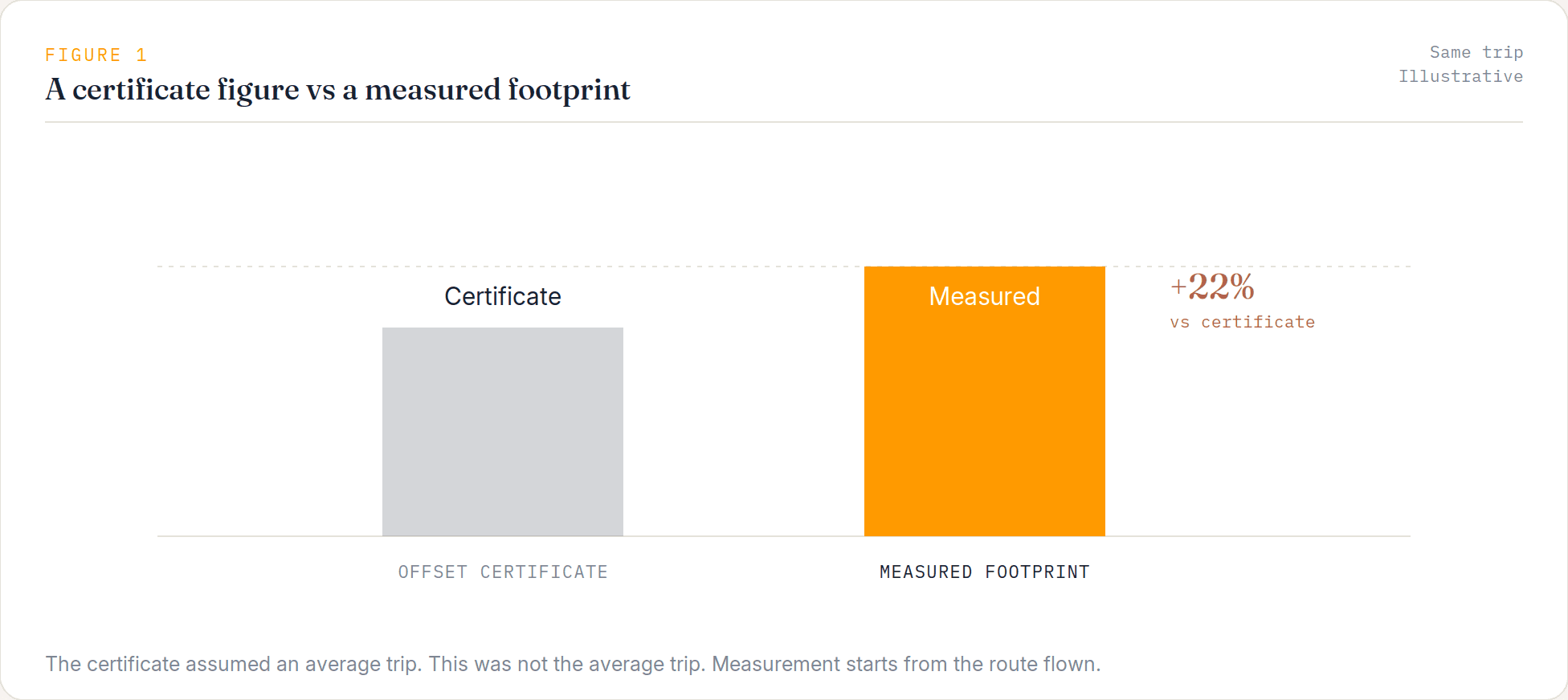
Figure 1: offset-certificate figure vs measured footprint for the same trip.
The measured footprint came out about 22% off the offset provider's figure.
Offset estimates typically rely on generic assumptions; the measured method instead uses the aircraft assigned to the trip and the route flown, which is why the result differed.
The client received a per-flight footprint stated at route and aircraft-type level, which they could put straight into their own reporting, and the broker became the source of a defensible number rather than a reseller of certificates.
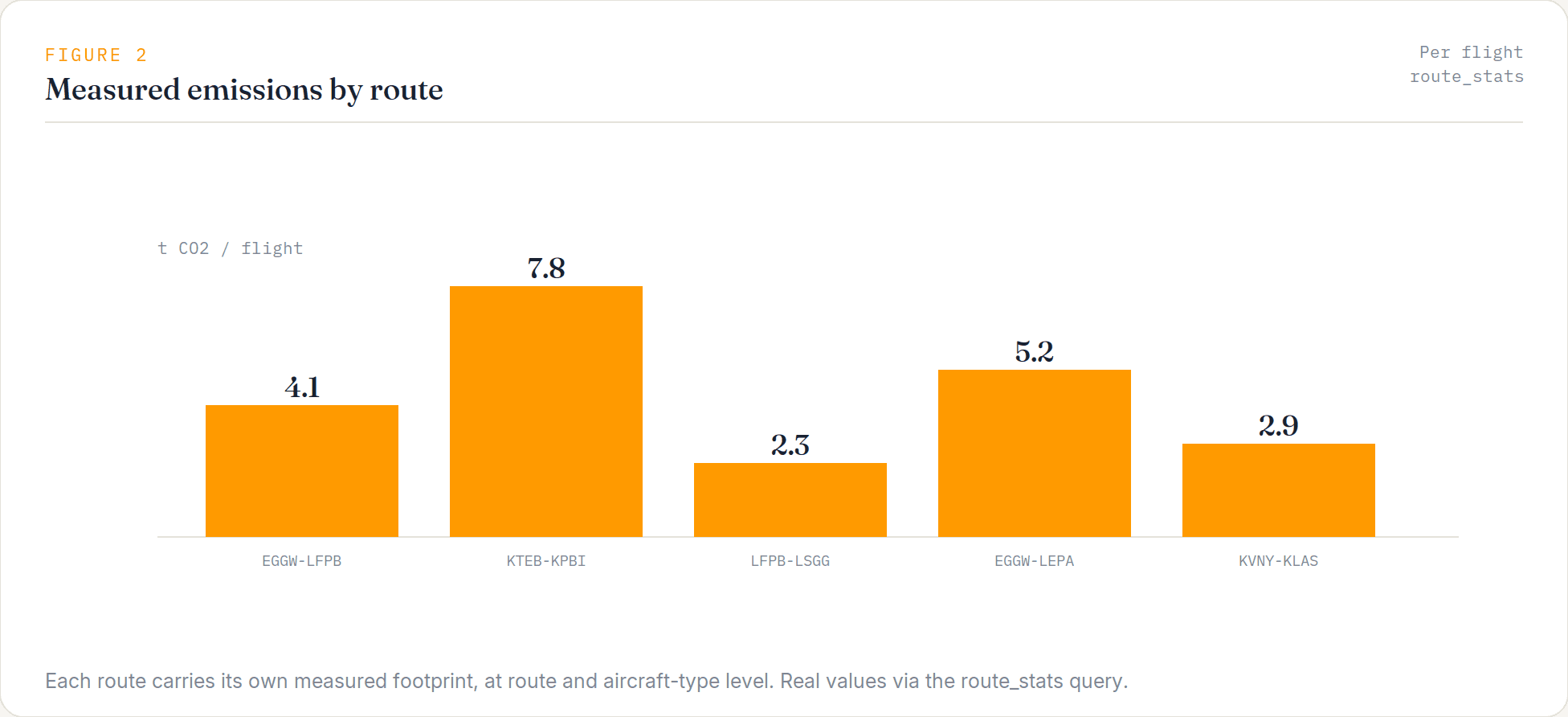
Figure 2: measured emissions for a representative route, per flight and per aircraft type.
When the client needs a report, not just a number
A footprint answers a single trip.
Some clients need more: a client-ready emissions report they can put straight into their own Scope 3 accounting.
The same measured flights roll up into an Emissions Statement, a per-flight document with measured and estimated legs marked, EU or UK ETS touch flagged per leg, and coverage completeness stated.
For a broker, that turns "can you send us our emissions for the year?" from an awkward request into a deliverable you already hold.
The data and methodology
The published methodology is only part of the problem.
Producing a measured footprint for an individual charter flight requires reconstructing what actually flew.
Flight activity is reconstructed from ADS-B observations.
Emissions are then calculated using the published EUROCONTROL EMEP/EEA 2023 methodology, with fixed conversions and no smoothing or interpolation applied to measured flights.
TailCheck resolves a specific aircraft's flying history; Model Intelligence sets the trip in the context of how that model flies across its tracked fleet.
Every footprint includes a coverage completeness score, showing what proportion of the calculation is based on observed flight activity rather than estimation.
What this cannot tell you
Being explicit about the limits is what makes the rest defensible.
It reports emissions at flight, route, and aircraft-type level.
It does not name passengers, and it does not invent data. Where observation is incomplete, that is shown.
And it is a measurement, not an offset and not a sustainability claim on the client's behalf.
Those constraints are what give the figure an auditable basis.
A per-flight footprint is one application.
The same record also supports route benchmarking and fleet-level context for your book of aircraft.